
Our Research
Subscribe to Kaizen Research
Get our latest research reports in your inbox, subscribe now.
Kaizen Research Types
Impact Focused Research
1. Vision Report
Future-state narrative with guiding principles, target architecture/operating model, and north-star KPIs.
2. Executive Overview Report
A one- or two-page brief summarizing key findings, why it matters, and recommended next steps for decision-makers.
3. Overview Report
Provides a summary and analysis or a certain aspect rather than deep technical or methodological detail.
4. Trends Report Report
Synthesis of market/technology shifts with evidence, signals, and implications for the next 12–24 months.
5. Predictions Report
Time-bound calls on what will happen and why, plus “so-what” actions to prepare.
6. Forecast Report
Quantitative projections (scenarios, assumptions, confidence ranges) for demand, adoption, or performance.
7. Benchmark Report
Comparative ranking against peers or standards; clear scoring model, criteria, and takeaway gaps.
8. Best Practices Report
Proven approaches with do/don’t checklists, prerequisites, and pitfalls to avoid.
9. Case Study Report
Real project story – challenge, approach, solution, and outcomes with metrics and lessons learned.
10. Business Case Report
Costs, benefits, risks, and options; ROI/SRIO/NPV/TEI calculations with sensitivity analysis.
11. Data Brief Report
Concise metrics snapshot with charts and commentary highlighting patterns and anomalies.
12. Survey Report
Methodology, sample, findings, and cross-tabs; includes key charts and practitioner insights.
13. Maturity Assessment Report
Diagnostic across dimensions; stage definitions, gap analysis, and prioritized recommendations.
14. Model/Framework Overview Report
Explains a model’s components and interactions, with usage scenarios and boundaries.
15. Methodology Guide Report
Step-by-step process, roles, deliverables, and artifacts; includes templates and acceptance criteria.
16. Roadmap Report
Phased plan with milestones, dependencies, risks, and measurable success criteria.
17. Toolkit
Pack of tools (canvases, calculators, checklists) to execute a method or initiative.
18. Template Report
Ready-to-fill documents (policies, RFPs, playbooks) standardized for faster, consistent delivery.


Our Featured Research
February 17, 2026
Summary Psychological safety unlocks the full capacity of human intellect. It transforms honesty int...More
Psychological Safety in Work Environments
Summary
Psychological safety unlocks the full capacity of human intellect. It transforms honesty into knowledge, knowledge into improvement, and improvement into sustainable institutional excellence.
In safe environments, trust flourishes, learning accelerates, and organisational impact deepens. Every institution’s “ceiling” rises in proportion to the level of safety its people experience. When safety becomes an embedded culture, minds work with clarity and organisations move steadily toward leadership and distinction.
era (U.S. Army Heritage and Education Center, 2018).
The Centrality of Safety in Human Life
Safety is not merely a workplace concept—it is deeply rooted in human existence and relationships.
Over twelve centuries ago, the Arab poet Abu Tammam emphasised that security begins with people before buildings. Neighbours create reassurance through mutual respect and everyday goodwill (Al-Saeedi, 2005). He wrote:
“I built the neighbour before the home.”
Here, safety is framed as relational: walls may protect the body, but a good neighbour protects the soul from loneliness and fear. The Prophet Muhammad (peace be upon him) also sought refuge from the harm of a bad neighbour, highlighting the moral weight of social safety (Al-Nasa’i, 2001).
A Bedouin poetic anecdote further illustrates how, in moments of hardship, essentials outweigh luxuries. When asked what meal he desired while trembling from cold, he replied:
“Cook me a cloak and a shirt.”
This rhetorical device (mushākalah) reveals a simple truth: when need intensifies, comfort becomes more urgent than indulgence (Al-Hashimi, n.d.).
Why Safety Is Necessary in the Workplace
The same principle applies directly to organisational life.
Employees cannot innovate or contribute fully when preoccupied with self-protection—measuring every word, anticipating misinterpretation, or fearing blame.
Many brilliant ideas remain unborn simply because no safe space existed for them to be spoken. Often, institutional excellence begins at the moment a person feels their voice truly matters.
In daily meetings and interactions, a workplace climate forms that determines whether minds will operate at full capacity or merely “show up” to avoid accountability.
Modern business demands have expanded our understanding of the relationship between performance and psychological wellbeing. Workplace quality is now measured not only by productivity indicators, but also by its ability to protect mental balance and professional identity.
This recognition has led organisations to treat mental health as an investment in human capital rather than a peripheral issue (Public Health Authority, 2022).
Psychological Safety as a Learning Climate
In this context, safety emerges as a shared belief that:
- speaking honestly
- asking questions
- discussing mistakes
- challenging assumptions
are behaviours that strengthen teams rather than weaken them.
When such a climate prevails, knowledge flows, trust grows, and dialogue becomes a continuous engine of learning.
Research confirms that psychologically safe teams learn faster, decide better, and innovate more effectively (Landry, 2021; Edmondson, 1999).
Why Safety Changes the Rules of Performance
Organisational studies identify psychological safety as one of the strongest predictors of collective performance
Safe teams handle sensitive information transparently, detect risks early, and transform failures into learning opportunities.
The cycle becomes:
Error → Knowledge → Improvement → Excellence
Such teams discuss setbacks objectively and build cumulative capability over time (Landry, 2021; Frazier et al., 2017; Newman et al., 2017).
The Employee Journey: From Belonging to Impact
Psychological safety develops through sequential stages of maturity. The following framework is widely recognised (Clark, 2020):
| Stage | Description | Organisational Outcome |
| 1. Inclusion Safety | Individuals feel accepted and valued by leaders and peers | Belonging and loyalty (Boushlagham, 2018) |
| 2. Learner Safety | People ask questions, request help, and admit knowledge gaps | True learning culture (Omar, 2014) |
| 3. Contributor Safety | Employees share ideas and initiatives confidently | Full use of intellectual capital (Al-Attal, 2020) |
| 4. Challenger Safety | Teams practice constructive critique and review assumptions | Organisational immunity against stagnation (Haber, 2022) |
Psychological Safety as a Competitive Advantage
Leading organisations treat safety as a strategic asset. Its impact appears in:
- Higher-quality strategic decisions
- Faster organisational learning
- Sustainable innovation
- Stronger talent retention
- Improved organisational health
Conscious leadership creates this climate through:
- intellectual humility
- encouraging feedback
- rewarding initiative
- designing inclusive conversations where everyone has a voice
Note on Consolidation
Some near-identical sentences in the Arabic source were consolidated in translation to improve readability while preserving intent, in accordance with the instructions.
Closing
Psychological safety is the soil in which institutions grow human brilliance. It ensures that ideas are spoken before they disappear, differences are managed as strengths, and learning becomes continuous.
Ultimately, safety is not a “soft” organisational value—it is a decisive leadership choice that elevates both people and performance together (Edmondson, 2018; Public Health Authority, 2022).
References
- Al-Attal, H.F.S. (2020) The role of intellectual capital in achieving organisational ambidexterity in health organisations: A case study of the Palestinian Red Crescent Society [Unpublished Master’s thesis]. Al-Quds University.
- Al-Hashimi, A.I. (n.d.) Jawahir al-balaghah fi al-ma‘ani wa al-bayan wa al-badi‘. Edited by Y. Al-Sumaili. Beirut: Al-Maktabah Al-Asriyyah.
- Al-Nasa’i, A.B.S. (2001) Al-sunan al-sughra (al-mujtaba). 2nd edn. Edited by A. Abu Ghuddah. Beirut: Islamic Publications Office. (Original work published 303 AH).
- Al-Saeedi, A.A. (2005) Bughyat al-idah li-talkhis al-miftah fi ‘ulum al-balaghah. 17th edn. Cairo: Maktabat al-Adab. (Original work published 1391 AH).
- Boushlagham, Z. (2018) Social interaction in virtual groups: The role of social presence [Unpublished doctoral dissertation]. University of Algiers 3.
- Clark, T.R. (2020) The 4 stages of psychological safety. Oakland, CA: Berrett-Koehler.
- Edmondson, A. (1999) ‘Psychological safety and learning behavior in work teams’, Administrative Science Quarterly.
- Edmondson, A. (2018) The fearless organization. Hoboken, NJ: Wiley.
- Frazier, M.L. et al. (2017) ‘Psychological safety: A meta-analytic review’, Personnel Psychology.
- Haber, J. (2022) Critical thinking. Translated by Hindawi Foundation. Cairo: Hindawi. (Original work published 2020).
- Landry, S. (2021) ‘Psychological safety in the workplace: Why it’s important’, HBS Online, 1 July. Available at: https://online.hbs.edu/blog/post/psychological-safety-in-the-workplace (Accessed: 17 February 2026).
- Newman, A. et al. (2017) ‘Psychological safety: A systematic review’, Human Resource Management Review.
- Public Health Authority (2022) Guideline for mental health in workplace environments (First edition). Riyadh: Public Health Authority.
- Omar, H. (2014) ‘Psychological security and its relationship to motivation for learning: A field study in the secondary schools of Berriane’, Journal of Humanities and Social Sciences, (16), pp. 191–210.

January 26, 2026
Summary In the modern digital economy, data should be treated as a tangible organisational asset rat...More
Why Data Management Offices (DMOs) Fail to Realise Their Strategic Value
Summary
In the modern digital economy, data should be treated as a tangible organisational asset rather than a purely technical by-product. It is no longer a secondary output of IT systems; it is a strategic resource that requires governance and management extending beyond software code and infrastructure (DAMA International, 2017).
Despite this shift, many organisations struggle to realise value from establishing Data Management Offices (DMOs). A persistent challenge is functional disconnection: the DMO operates as a conceptual or policy unit, IT as an execution unit, and business units as data consumers. This fragmentation dissipates the expected value of data and weakens enterprise-wide governance.
The Problem: Functional Disconnection and Data Silos
Drawing on professional experience in establishing and operating DMOs at Kaizen Consulting, the author observes a “silent gap” threatening even the largest data governance initiatives. In many entities, the DMO becomes an isolated island that produces paper-based policies, while technical and operational realities follow a completely different trajectory.
This structural challenge is widely recognised in academic and professional literature as data silos, the separation of governance from execution and the lack of institutional integration between DMOs, IT, and operational units (Khatri and Brown, 2010). The result is a governance model that exists in theory but not in practice.
Structural Tensions Between DMO, IT, and Business Units
1. DMO–IT structural conflict
IT departments often perceive the DMO as an administrative burden or a compliance body that slows delivery. This perception leads to:
- Paper-based governance: data policies defined by the DMO that cannot be technically implemented.
- Standards duplication: IT teams designing databases independently, without reference to approved data modelling standards.
Such misalignment undermines the integration of governance into the system development lifecycle and reinforces siloed practices (Otto, 2011).
2. Knowledge gap between DMO and business units
Operational departments typically treat data from a short-term, immediate-need perspective, while DMOs approach data from a sustainability and governance perspective. This gap results in:
- Absence of data ownership: business units disclaim responsibility for data quality, shifting blame to IT or the DMO.
- Loss of business value: the DMO’s limited understanding of business context leads to governed data that lacks operational relevance.
The literature highlights this issue as a failure to embed governance roles within business processes, rather than positioning them as external controls (Weber, Otto and Österle, 2009).
Academic Analysis of Root Causes
From an academic standpoint, three root causes explain this persistent disconnection:
- Flawed operating model: The DMO is often designed as a standalone department rather than a cross-functional function. Best practice positions data governance as an enterprise capability embedded across organisational boundaries (DAMA International, 2017).
- Conflicting performance indicators (KPIs): When IT is measured by speed, the DMO by compliance, and business units by profitability, without a shared KPI for data-driven value, internal conflict becomes inevitable. This misalignment erodes collaboration and shared accountability (Khatri and Brown, 2010).
- Weak data-driven culture: Data management is frequently perceived as an additional task, not a core responsibility. The absence of a data culture prevents employees from integrating data quality and stewardship into daily work (Earley, 2016).
A Roadmap for Integration and Value Realisation
To address this fragmentation, organisations must shift from a model of isolated islands to a strategic partnership model. This transition involves coordinated action across governance, operations, technology, and organisational structure.
Governance: from control to enablement
Data governance should evolve from a compliance-focused model to an enabling one. The DMO should move from saying “no” due to non-compliance to providing practical tools, such as data dictionaries and automated data quality mechanisms, that facilitate technical and operational performance (Weber, Otto and Österle, 2009).
Operations: activating data owners and stewards
Each business unit should formally appoint Data Owners and Data Stewards to act as active interfaces with the DMO. Their responsibilities go beyond nominal titles:
- Defining business-driven data quality rules.
- Translating these rules into requirements for IT implementation.
- Linking incentives and rewards to the accuracy and maturity of their unit’s data.
This approach embeds accountability directly within business operations (Khatri and Brown, 2010).
Technology: procedural integration with the SDLC
Data standards review must become a mandatory step within the Systems Development Life Cycle (SDLC). No system should be launched without formal DMO approval of its data architecture from the earliest design phase. This ensures that governance is “coded into” systems rather than retrofitted later (Otto, 2011).
Organisation: establishing a steering committee
A cross-functional steering committee, led by senior management and comprising IT, operations, and the DMO, is essential. Its role is not to debate technical details, but to ensure that:
- The data strategy serves business objectives.
- Technology infrastructure effectively supports operational needs.
Such governance bodies are widely recognised as critical for aligning strategy, governance, and execution (DAMA International, 2017).
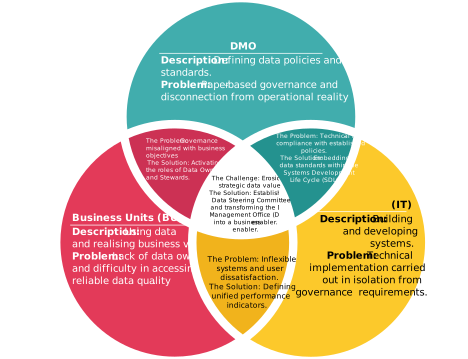
Conclusion: Data as the Organisational Nervous System
Data can only generate maximum value when treated as the nervous system of the organization, connecting the brain (leadership) to the limbs (operations) through technological pathways. The success of a DMO should not be measured by the number of policies produced, but by the extent to which those policies are embedded in IT code and reflected in everyday operational decisions.
The central question remains: in your organisation, is the Data Management Office an enabler of business value, or merely a regulatory body?
Closing
This report highlights that the failure of many DMOs is not technical but structural and cultural. Bridging the gap between governance, technology, and operations requires redesigning operating models, aligning incentives, embedding stewardship roles, and integrating governance into system development. When these elements converge, data governance shifts from theory to practice, enabling sustainable, data-driven value creation across the enterprise.
References
- DAMA International (2017) DAMA-DMBOK: data management body of knowledge. 2nd edn. Basking Ridge, NJ: Technics Publications.
- Earley, S. (2016) The data lake: a foundation for enterprise agility. Boston, MA: O’Reilly Media.
- Khatri, V. and Brown, C.V. (2010) ‘Designing data governance’, Communications of the ACM, 53(1), pp. 148–152. https://doi.org/10.1145/1629175.1629210
- Otto, B. (2011) ‘Organizing data governance: findings from the telecommunications industry and consequences for large service providers’, Communications of the Association for Information Systems, 29(1), pp. 45–66.
- Weber, K., Otto, B. and Österle, H. (2009) ‘One size does not fit all - a contingency approach to data governance’, Journal of Data and Information Quality, 1(1), pp. 1–27. https://doi.org/10.1145/1515693.1515696
December 28, 2025
Summary Many governments and technology developers seek to embed digital inclusion as a core enabler...More
From Equity to Leadership
Summary
Many governments and technology developers seek to embed digital inclusion as a core enabler within their services, in order to strengthen social participation and promote sustainable development. According to the International Telecommunication Union (ITU), digital inclusion refers to ensuring that everyone, regardless of geographic location, gender, age, or differences in abilities, can access and benefit from digital products and services in a fair and equitable manner (ITU, n.d.).
Digital inclusion encompasses several groups of technology users, including people with disabilities of different types (such as physical, hearing, visual, and cognitive disabilities), senior citizens, and residents of remote areas. In this context, a report issued by the Saudi Digital Government Authority in July 2025 indicates that there are more than 1.3 million persons with disabilities in the Kingdom of Saudi Arabia, while older persons account for approximately 5% of the total population (Digital Government Authority, July 2025).
Strategic Value of Digital Inclusion
Beyond ensuring equitable access to digital services, digital inclusion contributes to achieving a range of strategic objectives for governments and organizations. It plays a key role in enhancing transparency and trust in institutional services, supporting economic growth by encouraging broader social participation, and improving quality of life for all segments of society through easy and convenient access to services.
However, embedding inclusion within digital services depends on several interrelated dimensions. These dimensions collectively shape the extent to which digital services are accessible, usable, and beneficial to diverse user groups, and they form the foundation for sustainable digital transformation (ITU, n.d.).
Key Dimensions of Digital Inclusion
Digital inclusion rests on multiple, mutually reinforcing dimensions. Each dimension addresses a different barrier to equitable participation in the digital environment and requires coordinated policy and operational responses.
Regulatory and Legislative Dimension
Effective legal and regulatory frameworks are essential to guarantee access to digital services as a fundamental right. Such frameworks obligate public and private sector entities to incorporate inclusive features into their digital services, ensuring that accessibility and usability are not optional but mandated components of service design.
Technical Infrastructure Dimension
Another critical dimension is the availability of adequate technical infrastructure, including telecommunications networks and internet connectivity. This infrastructure enables individuals across different geographic areas, particularly remote and underserved regions, to access digital services reliably and efficiently.
Cultural and Educational Dimension
The cultural and educational dimension focuses on building the skills required to interact with technology. This includes training and capacity-building initiatives, especially for groups with greater needs, such as elderly, to ensure that access to digital services contributes into effective and meaningful use.
Saudi Arabia’s National Efforts in Digital Inclusion
The Kingdom of Saudi Arabia places particular emphasis on digital inclusion, as evidenced by the launch of national initiatives and the adoption of relevant legislation. Digital transformation efforts under the National Transformation Program include initiatives aimed at enhancing digital inclusion across various sectors, thereby contributing to the reduction of social gaps and the expansion of access to resources and services.
A prominent manifestation of these efforts is the ecosystem of integrated government digital platforms, such as Madrasati, Sehhaty, Qiwa, and Balady, among others. These platforms provide comprehensive digital services designed to serve a broad spectrum of users.
In addition, the Kingdom has established an authority dedicated to the care of individuals with disabilities, serving as an umbrella body responsible for addressing their needs, including the development and enhancement of services provided to them. Furthermore, the Digital Government Authority has launched the “Digital Inclusion Program”, which primarily aims to increase the use of digital platforms by elderly and people with disabilities (Digital Government Authority, 2025).
Digital Inclusion as a Measure of E-Government Maturity
The importance of digital inclusion is not merely limited to enabling equitable social participation or improving service quality, but it has become one of the key criterion for assessing countries’ progress, the maturity of their e-government services, and their compliance with relevant international standards.
One of the most prominent international references in this regard is the United Nations E-Government Development Index (EGDI), in which the Kingdom ranked fourth out of 193 countries in 2024. This index is based on three dimensions that are closely linked to digital inclusion enablers (United Nations, 2024).
Saudi Arabia’s commitment to inclusive and high-quality digital services has also resulted in a significant recent achievement: attaining second place globally out of 197 countries in the Digital Government Maturity Index issued by the World Bank Group (World Bank, 2024).
At the national level, international indicators related to digital inclusion are complemented by local measurement frameworks. The Digital Government Authority has introduced an annual index to measure the maturity of the digital experience, with a strong focus on promoting inclusive access to, and effective use of, digital services by all user groups. Together, these indicators and initiatives reflect the growing importance of digital inclusion in achieving digital equity and reinforcing governments’ leadership positions.
Closing
The article emphasizes that digital inclusion has evolved from a marginal concern into an important pillar of modern digital government. By addressing regulatory, infrastructural, and cultural dimensions, Saudi Arabia has embedded digital inclusion as both a core social equity priority and a key indicator of e-government maturity. National and International indicators demonstrate that inclusive digital services are essential to enhancing transparency, trust, and global competitiveness, thereby reinforcing the Kingdom’s progression from ensuring digital equity to achieving digital leadership.
References
- Digital Government Authority (2025) Digital inclusion report. Riyadh: Digital Government Authority. Available at: https://www.dga.gov.sa (Accessed: 28 December 2025).
- International Telecommunication Union (ITU) (n.d.) Digital inclusion. Available at: https://www.itu.int (Accessed: 28 December 2025).
- United Nations (2024) United Nations e-government survey 2024: accelerating digital transformation for sustainable development. New York: United Nations Department of Economic and Social Affairs. Available at: https://publicadministration.un.org (Accessed: 28 December 2025).
- World Bank (2024) GovTech maturity index: benchmarking digital government transformation. Washington, DC: World Bank Group. Available at: https://www.worldbank.org (Accessed: 28 December 2025).

January 15, 2025
Summary In recent times, there has been a growing sense of confusion and unease surrounding artifici...More
VUCA and Artificial Intelligence: Navigating Complexity in the Age of Uncertainty
Summary
In recent times, there has been a growing sense of confusion and unease surrounding artificial intelligence (AI) across all sectors, from researchers, engineers, and physicians to educators, students, and business owners. Some fear AI silently; others approach it with excessive enthusiasm; while many stand by, watching cautiously, uncertain whether this wave will drown them or carry them forward. This collective uncertainty captures a global phenomenon aptly described by the concept of VUCA, an acronym for Volatility, Uncertainty, Complexity, and Ambiguity. The term was first introduced in a discussion with Dr. Saad Ibrahim AlKhalaf, Executive Vice President of Arrowad Group, who highlighted its relevance in understanding our relationship with artificial intelligence. Indeed, the world we inhabit today is volatile, complex, ambiguous, and filled with uncertainty, the defining traits of the AI era (U.S. Army Heritage and Education Center, 2018).
Living in a VUCA World
Under the influence of artificial intelligence, humanity now exists within a world governed by VUCA dynamics:
- Volatility: Rapid shifts that destabilize even experts.
- Uncertainty: Lack of predictability that disrupts decision-making.
- Complexity: Interconnected systems and intricate algorithms that blur cause and effect.
- Ambiguity: Widespread confusion that deepens hesitation and fear of the future.
The AI revolution is not merely a technological upheaval, it is a cognitive transformation that redefines how we think, decide, and perceive our surroundings. The real challenge is not AI itself, but the noise and misinformation surrounding it. Even specialists oscillate between extremes of over-enthusiasm and complete denial.
This raises critical questions:
- Where do we stand in this evolving landscape?
- Are we simply consumers of AI innovation?
- Can we still shape its trajectory?
- Or have we fallen too far behind, content merely to observe?
From Reaction to Understanding: Building Resilience through Awareness
The answer does not lie in chasing every emerging tool or trend, but in developing deep understanding. We do not need to master every AI system, but we must comprehend the essence of this paradigm shift.
Education must acknowledge the VUCA state we live in and prepare new generations to engage with ambiguity, uncertainty, and constant change. The goal should not be to prepare students for static jobs, but to equip them with adaptability, self-learning, and the ability to ask meaningful questions, the true survival skills of a VUCA-driven world.
At the individual level, it is time to move from reaction to action. We must cultivate technological awareness that helps us distinguish between hype and genuine progress. Human worth lies not in memorization or computation, but in wisdom, creativity, moral judgment, and an understanding of human and cosmic nature, qualities that remain far beyond the reach of machines.
From Strategy to Implementation: Institutional and Policy Implications
At the level of governments and institutions, adopting AI should not be reduced to technological display or branding exercises. Instead, it must be pursued as a strategic endeavor, beginning with education, passing through policy, and grounded in an understanding of our local and global context.
We need policies and frameworks that not only react to VUCA forces but adapt within them, turning volatility and complexity into engines for innovation and resilience. This means building systems that can learn, adjust, and evolve, not resist change but thrive within it.
Closing
We are living through the epicenter of a global earthquake whose aftershocks continue to reshape our world. Yet within this disruption lies an opportunity for renewal. Artificial intelligence will not define our future for us, we will, to the extent that we understand and embrace this volatile, uncertain, complex, and ambiguous reality.
AI is not merely a technical question; it is a philosophical and existential one. It asks whether humanity still possesses the capacity to understand itself, in a world that is increasingly unlike itself.
References
- U.S. Army Heritage and Education Center (2018) “Who first originated the term VUCA (Volatility, Uncertainty, Complexity and Ambiguity)?” USAHEC Ask Us a Question, The United States Army War College. Archived from the original on 2 June 2021. Retrieved 10 July 2018. Available here.
Submit a Comment

September 26, 2024
Summary Many organizations aspire to achieve institutional excellence, yet few truly understand its ...More
Understanding Excellence Before Building its Framework
Summary
Many organizations aspire to achieve institutional excellence, yet few truly understand its essence before attempting to build its framework. Genuine excellence cannot emerge from complexity or abstraction; it grows when systems and concepts are presented simply, clearly, and in a way that everyone can understand and apply.
Understanding precedes application. The difference between success and struggle often lies in how clearly an organization communicates the goals, tools, and requirements of its excellence framework.
The Power of Simplification
A notable example is that of a person known for the ability to simplify complex scientific topics, transforming difficult material into engaging, accessible discussions that awaken curiosity and inspire learning.
The same principle applies to organizations pursuing excellence. The ability to simplify, clarify, and make systems accessible across all organizational levels is not trivial, it is central to success. When leaders present the full picture of an excellence framework, its objectives, requirements, and practical tools, employees can apply them more easily, from top management to frontline staff.
Simplification, then, is not a luxury, it is a strategy for sustainable excellence (Schein, 2010).
Shared Understanding Before Implementation
Excellence cannot be achieved through aspiration alone, nor through slogans, nor by assigning responsibility to a single person or department. It requires a collective understanding shared by all members of the organization.
Only when everyone comprehends the principles and tools of excellence can they take ownership of achieving it. This shared understanding fosters a sense of responsibility and belief in the value of the system itself (Kotter, 2012).
Without such understanding, organizations risk treating excellence as an external requirement rather than an internal culture.
Many organizations struggle with the requirements of excellence due to misunderstanding, misapplication, or perceived difficulty. In some cases, these challenges lead to disengagement, resistance, or submission of irrelevant data that do not serve the system’s true objectives.
To address this, leaders must provide clear guidance, expert consultation, and ongoing clarification to ensure that each requirement of excellence is well understood. As Deming (1986) noted, clarity of purpose is a prerequisite for quality and consistency.
When misunderstanding is left unaddressed, organizations risk undermining both morale and performance.
The Art of Communication: Speak in Their Language
Simplifying and clarifying the project, by clearly defining its objectives and roles, and communicating with stakeholders in a language they understand, is a successful formula and an effective approach. This includes addressing them in the languages they master as fluently as their native tongue.
The intent behind simplification here is not to be lenient in applying standards, to neglect the measurement of indicators, or to avoid the use of robust, proven systems necessary for closing the loop of continuous improvement. Rather, the goal is to make the excellence project easy to understand, practical to implement, linguistically clear, and harmoniously aligned with the capabilities of the individuals and units responsible for its execution.
These elements are like the teeth of a key that must align perfectly with the lock for the door to open smoothly and effortlessly. Indeed, addressing people according to their level of understanding is a noble prophetic principle.
Divine Example of Ease and Clarity
A profound reflection may be drawn from the Qur’anic verse: “And We have certainly made the Qur’an easy for remembrance, so is there any who will remember?” (Qur’an, 54:17)
Even the most powerful and eloquent form of divine guidance, the Book of God, is described as made easy. This illustrates a timeless truth: clarity and simplicity are not weaknesses but marks of strength, wisdom, and accessibility.
Closing
The journey toward institutional excellence begins not with systems or checklists, but with understanding. Simplification, communication, and clarity are not mere facilitative tools, they are the very foundation of sustainable excellence.
True excellence is achieved when organizations ensure that every member understands the purpose, tools, and value of their excellence framework, making it a shared mission rather than a management initiative.
Excellence is not built on complexity, it thrives on clarity, shared conviction, and simplicity in execution.
References
- Deming, W. E. (1986) Out of the crisis. Cambridge, MA: MIT Press.
- Kotter, J. P. (2012) Leading change. Boston: Harvard Business Review Press.
- Schein, E. H. (2010) Organizational culture and leadership. 4th edn. San Francisco: Jossey-Bass.
- The Holy Qur’an (n.d.) Surah Al-Qamar (54:17).
Submit a Comment

November 17, 2025
Summary The National Data Governance and Maturity Index (NDI) measures how well entities in Saudi Ar...More
The Strategic Dimension in the Structure of the Data Governance Maturity Index
Summary
The National Data Governance and Maturity Index (NDI) measures how well entities in Saudi Arabia develop their data infrastructure and comply with national data standards. It is structured across 14 domains and two main dimensions: Strategic and Executive.
This report highlights the Strategic Dimension as the key driver that guides entities’ data management approach and aligns long-term visions with day-to-day operations. By setting this direction, it enables the Executive Dimension to effectively implement and comply with the required controls and specifications.
The Foundational Role and Strategic-Executive Relationship
The Strategic Dimension in the NDI represents the driving force and defining factor for the overall structure, making it the primary and most influential factor in the index's framework and in the successful achievement of compliance with controls and specifications issued by the National Data Management Office (NDMO).
The Strategic Dimension, with its long-term perspective, is the foundation upon which the Executive Dimension is entirely built. It contributes significantly and heavily to the maturity assessment (with percentages ranging from 20% to 75% across various domains, reaching 60% in Content Management and 57% in Data Modeling). This high proportion confirms that executive performance cannot achieve its tangible results unless it is consistent and guided by the approved strategic visions and directions. Consequently, this integrated relationship ensures that high-level plans are translated into effective daily practices, establishing sustainable compliance with the required national specifications.
Methodology and Defining the Governing Role of Strategy
The analysis of the index's structure and the contribution of the two dimensions relied on official detailed data for the distribution of controls and specifications within the National Index. This distribution is specifically based on the official documents issued by (NDMO, 2021) and (SADIA, 2021), which validates the quantitative basis for analyzing the Strategic Dimension's role as a fundamental guiding factor in the index's structure.
The analysis of the compliance index structure within the NDI shows that the Strategic Dimension is the guiding, governing, and foundational pillar of the index's structure. The definition of its key roles includes:
- Foundation/Pillar: It is the essential support element for the entire data management structure; without it, the index cannot be established or its objectives achieved.
- Guiding: It defines the direction and priorities, mapping the path for the Executive team to follow towards achieving the long-term vision, preventing arbitrary decisions.
- Governing: It sets the oversight framework and high-level controls (Governance Framework), determining "what must be done," "why it must be done," and "how it is measured," ensuring executive activities remain compliant with institutional policies.
- Foundational: It is responsible for establishing the initial organizational structure and policies, including founding committees and defining roles responsible for data management.
Structure and Guidance: The Command Relationship
The importance of the Strategic component lies in setting the long-term foundations, plans, and policies that organize the general framework for data management. The relationship between the two dimensions is built on the principle of Structure and Guidance:
- The Structure: The Strategic Dimension builds the framework within which the Executive Dimension operates (e.g., establishing a "Data Governance Committee").
- The Guidance: It sends directives and tasks to the Executive Dimension, which the Executive must translate into detailed operational procedures.
This relationship represents one of leadership and control: the Strategic Dimension establishes the framework (Structure) and sends the orders (Guidance), which the Executive Dimension must follow to transform them into practical reality.
Causality and Integration
This foundational premise establishes that the relationship between the two dimensions is built on the principle of causality and integration to ensure compliance:
- Strategic Dimension (The Primary Driver): It is the primary determinant and controller of the general framework, guaranteeing all efforts align with the institutional vision. Its contribution forms the basis of compliance controls and specifications (40% of controls and 36% of specifications overall). This distribution confirms that the soundness and effectiveness of executive procedures rely entirely on the correctness of the adopted strategic direction, with the Strategic Dimension serving as the prerequisite for success.
- Executive Dimension (The Operational Weight): This is the active tool responsible for translating strategies into daily practices and measurable outcomes. Although it carries the largest share of the actual compliance weight (contributing between 60% and 80% in some areas), its implementation efficiency remains contingent upon the guidance provided by the Strategic Dimension.
Ensuring effective integration and collaboration is the crucial key to applying strategic directions efficiently, leading to full compliance with the National Data Index.
Quantitative Analysis of Strategic and Executive Contributions
The quantitative analysis confirms that while effective execution carries the largest weight in achieving actual compliance, this execution is entirely constrained and guided by the strategic foundations, which ensure the integrity of the institutional direction.
Table 1: Overall Contribution of Strategic and Executive Dimensions
| Overall Component | Total | Strategic Controls (Guidance) |
Executive Controls (Application) |
Analysis of Strategic Impact (Governance) |
| Total Controls | 77 Controls | 31 Controls (40%) | 46 Controls (60%) | The Strategic Dimension represents the cornerstone at 40%, ensuring that 40% of compliance requirements are linked to high-level policies and frameworks. |
| Total Specifications | 191 Specifications | 68 Specifications (36%) | 123 Specifications (64%) | Strategic specifications form nearly one-third (36%) of the general framework, setting the standards and principles that must be operationally translated. |
The analysis of the 14 domains shows that domains with a governance and planning nature (e.g., Modeling and Content Management) rely mainly on strategic direction, while domains with an operational and technical nature (e.g., Integration and Quality) focus on execution.
Table 2: Analysis of the Strategic Dimension's Contribution Across the 14 Data Management Domains
| Domain | Controls (Strategic %) | Specifications (Strategic %) | Summary of Strategic Role (Guidance and Control) |
| 1. Data Governance | 38% Strategic | 25% Strategic | Guiding Reference: Strategy sets the general frameworks and principles for governance, essential for directing long-term regulatory commitment. |
| 2. Metadata and Data Catalog | 50% Strategic | 35% Strategic | Governance Balance: Equal contribution in controls confirms that metadata creation requires a clear strategic vision before actual documentation. |
| 3. Data Quality | 25% Strategic | 23% Strategic | Foundational Planning: Execution dominates daily processes (approx. 75%), but Strategy determines target quality levels and long-term policies. |
| 4. Data Storage | 40% Strategic | 36% Strategic | Sustainability Definition: Strategic impact appears in setting sustainable strategies for infrastructure, with execution ensuring tangible application. |
| 5. Content and Document Management | 60% Strategic | 50% Strategic | Leading Strategic Role: Strategy is paramount in planning and establishing the content and document management system before operational execution. |
| 6. Data Architecture and Modeling | 57% Strategic | 69% Strategic | Highest Strategic Focus: Strategy represents the structure and design (long-term vision), the strongest factor, as execution depends entirely on the model's correctness. |
| 7. Reference and Master Data Management | 50% Strategic | 56% Strategic | Balance Tilted Toward Strategy: Requires strong strategic guidance to set policies/standards, with execution ensuring cross-system alignment. |
| 8. Business Intelligence and Analytics | 40% Strategic | 60% Strategic | Vision Strategy: Requires concentrated strategic planning (60% in specifications) to define long-term analytical goals and support high-level decision-making. |
| 9. Data Integration and Sharing | 25% Strategic | 25% Strategic | Coordination Guidance: Requires a strategic vision to guide data sharing and set unified integration strategies, with a greater focus on execution. |
| 10. Achieving Value from Data | 25% Strategic | 25% Strategic | Asset Building: Requires developing clear plans and strategies to transform data into valuable assets, with execution translating strategies into tangible results. |
| 11. Open Data | 40% Strategic | 20% Strategic | Transparency Planning: Strategic dimension is essential for setting publishing conditions and transparency plans, the foundation for execution to ensure accessibility. |
| 12. Freedom of Information | 50% Strategic | 22% Strategic | Framework Leadership: Strategic controls reflect responsibility for setting the general framework and access policies, even if execution dominates practices. |
| 13. Data Classification | 20% Strategic | 20% Strategic | Framework Leadership: Despite execution dominance (80%), Strategy is responsible for defining the classification framework and governing standards, the prerequisite for any practice. |
| 14. Personal Data Protection | 40% Strategic | 30% Strategic | Compliance Leadership: Requires setting guided plans and strategies for legal compliance, with execution focused on daily protection practices. |
This analysis confirms a causal hierarchy between the two dimensions. In domains requiring planning and structuring (such as Content Management and Modeling), the Strategic Dimension rises to be the leader (over 50%). Conversely, in domains requiring daily operational effort (such as Integration and Quality), the strategic weight decreases, but the strategic direction remains the guarantor that the execution serves long-term objectives (Henderson and Venkatraman, 1993).
Closing
It is evident that the Strategic Dimension in the NDI is the fundamental and most influential pillar in the index's structure. It defines the long-term vision and directions for data management, establishing the governance framework and standards for compliance. This dimension acts as the primary mover and guide, ensuring that the Executive Dimension (concerned with applying policies and controls) is designed and implemented in a manner that serves the institution's higher objectives.
The core importance of the Strategic Dimension lies in ensuring Strategic Alignment between the organization's ambitions and its technical capabilities (Henderson and Venkatraman, 1993). While the Executive Dimension undertakes the task of translating these strategic visions into tangible results and actual compliance, their close integration is essential for achieving sustainable success and proving the institution's commitment to national and international standards.
The overall structure of the index is built on the principle of precise structural integration and balance, confirming it is not a mere collection of controls. The Strategic Dimension acts as a Guidance System, ensuring that the substantial execution efforts are effectively invested to achieve the National Data Vision.
References
- Henderson, J. C. and Venkatraman, N. (1993) ‘Strategic alignment: A model for organizational transformation’, Business Transformation Journal, 34(3), pp. 53–68.
- Office of National Data Management (NDMO) (2021) National Data Management and Governance Controls and Specifications, Version 1.5, January. Available at: https://www.ndmo.sa/ (Accessed: 17 November 2025).
- Saudi Data and Artificial Intelligence Authority (SDAIA) (2021) The National Data Index: Third Measurement Cycle. Available at: https://www.sdaia.gov.sa/ (Accessed: 17 November 2025)
Submit a Comment

March 7, 2025
Summary In the midst of the accelerating digital revolution, artificial intelligence (AI) has become...More
The So-Called “AI Washing”
Summary
In the midst of the accelerating digital revolution, artificial intelligence (AI) has become synonymous with progress and innovation. Companies across industries are eager to associate themselves with this transformation—not only through genuine technological investment but also through aggressive marketing that positions them as “AI-driven.”
This has given rise to a widespread and controversial phenomenon known as AI washing, a term referring to the misrepresentation or exaggeration of AI capabilities in products or services. The practice raises significant concerns around credibility, ethics, and technological literacy among consumers and investors (TechTarget, 2024).
Understanding “AI Washing”: The Modern Equivalent of Greenwashing
AI washing mirrors the earlier concept of greenwashing, where organisations overstate their environmental efforts for marketing gain. In this newer context, companies claim to employ advanced AI systems to appear innovative or to attract investors, when in reality, their technologies may be limited to simple automation or manual workflows disguised by technical jargon.
Common Motivations for AI Washing:
- Attracting investors by appearing technologically advanced.
- Inflating valuations through the illusion of AI innovation.
- Enhancing reputation and brand credibility.
- Justifying higher prices for supposedly “intelligent” solutions.
Such exaggerations distort public understanding of AI’s true nature, creating a growing gap between expectation and reality.
The Consequences of Exaggeration: Eroding Trust and Misuse of AI
The greatest danger of AI washing lies in its erosion of public trust. When customers discover that a supposedly “AI-powered” system relies on rudimentary software—or even human labor—their confidence in the technology weakens.
This erosion of trust does not only harm deceptive companies but also undermines faith in legitimate AI applications. The risk becomes especially severe in critical sectors like education or healthcare, where misleading AI claims can lead to misguided decisions and serious outcomes. Once exposed, false claims can result in reputational collapse, terminated partnerships, and investor withdrawal.
Causes Behind the Phenomenon
Several structural and cultural factors contribute to the proliferation of AI washing:
- Lack of universal standards defining what constitutes “real AI.”
- Limited regulatory oversight and auditing mechanisms.
- Low public and investor literacy in evaluating AI claims.
- Media amplification that prioritizes hype over critical analysis.
Consequently, not every product labeled as “smart” or “AI-enabled” truly leverages artificial intelligence in any meaningful way.
Real-World Examples: When the Illusion Collapses
In recent years, several high-profile companies have raised large investments by promoting themselves as AI platforms that empower users to build applications autonomously. Investigations later revealed that many of these systems relied heavily on manual human intervention, misleading users into believing the technology was fully intelligent.
The fallout from these revelations included terminated contracts, investor losses, and widespread skepticism toward AI startups. These cases illustrate that AI washing is far from a harmless exaggeration, it carries serious financial, ethical, and societal implications.
Building Transparency and Accountability
To combat AI washing, both regulatory reform and cultural awareness are essential. Organisations must:
- Disclose the technical foundations of their AI systems.
- Undergo third-party validation of claimed AI capabilities.
- Avoid ambiguous marketing that confuses automation with intelligence.
The media should also adopt an analytical role, focusing on verifying technical claims rather than amplifying promotional narratives. Moreover, universities and research institutions must train graduates to think critically, equipping them with the skills to differentiate authentic AI systems from superficial marketing.
Closing
AI washing represents a credibility crisis at the heart of the technological revolution. The goal is not to limit AI’s expansion, but to protect it from dilution and deception. Genuine AI does not need exaggerated claims—its impact is self-evident. False promises, however, inevitably collapse under scrutiny.
Building a culture of trust, transparency, and technical literacy is therefore the foundation for sustaining AI innovation and ensuring it remains a transformative force for good.
References
- TechTarget (2024) AI washing explained: Everything you need to know. 29 February. Available here (Accessed: 5 June 2024).
Submit a Comment

November 10, 2025
Summary Throughout history, every era has known its “Khanfashari”, the person who wears the illusion...More
The New “Khanfasharians” in the Age of Artificial Intelligence
Summary
Throughout history, every era has known its “Khanfashari”, the person who wears the illusion of knowledge, presenting themselves as a scholar without ever truly approaching scholarship. In today’s age of artificial intelligence (AI), such figures have multiplied in modern forms, dressed in the cloak of “experts,” wielding dazzling terminology that captivates the public, misleads newcomers, and clouds the work of genuine researchers. This modern phenomenon mirrors the ancient story of “Al-Khanfashar,” recounted in Nafḥ al-Ṭīb and other Arabic sources. The tale tells of a man who claimed knowledge in every field. Six companions, doubting his pretensions, invented a fictitious word, Khanfashar, and asked him its meaning. Without hesitation, he fabricated an elaborate answer: he claimed it was a fragrant plant in Yemen that curdled camel milk, quoted a fabricated verse, and even attributed a false reference to Dāwūd al-Anṭākī before falsely linking it to the Prophet. When confronted, he was exposed as a fraud, earning the title “Al-Khanfashari”, a lasting symbol of pretension and intellectual deceit (Wikipedia, n.d.).
The Modern Khanfashari: Digital Pretenders in the Age of AI
Today, the Khanfashari of artificial intelligence no longer invents meaningless words but skillfully recycles real ones, without grasping their true essence or application. They speak with authority about machine learning, sentiment analysis, or decision-making algorithms, promising revolutionary platforms and innovations, yet offering neither published research nor functional prototypes.
These individuals thrive on borrowed vocabulary, using complexity as camouflage. They mesmerize audiences with buzzwords while avoiding the rigor that defines authentic expertise. Their confidence, not competence, becomes their credential.
The Social and Institutional Consequences
The danger of this trend extends beyond personal deceit, it has collective consequences. Organizations are often seduced by these pretenders, allocating budgets to projects promised to “transform the future,” only to end up with beautiful interfaces and nonfunctional algorithms.
As a result, AI, an exact and demanding science grounded in mathematics, statistics, and engineering, is distorted into a spectacle of illusion. It becomes, in the hands of pseudo-experts, a marketing weapon, a symbol of status, or even a tool of deception.
The Roots of the Phenomenon
At the heart of this intellectual epidemic lie three main causes:
- A psychological need for visibility: A craving to appear knowledgeable without the effort of mastery.
- Profound intellectual emptiness: A lack of foundational understanding compensated by verbal showmanship.
- A cultural environment that glorifies rhetoric over truth: Where eloquence often triumphs over evidence, and applause replaces critical questioning.
Such individuals flourish in societies that do not value verification, where audiences rarely question sources, and where the distinction between the scholar and the imitator has become blurred.
Restoring Intellectual Integrity
To escape the grip of this phenomenon, societies must empower critical thinking and foster a culture of verification and accountability. Genuine knowledge connects words to action, a true expert does not merely speak but builds, tests, and presents measurable results.
The authentic scholar simplifies complexity, communicates with humility, and recognizes the limits of their own understanding. Meanwhile, the impostor thrives on obscurity, complexity, and applause.
AI is not magic nor mysticism, it is a discipline rooted in mathematics, statistics, algorithms, and experimentation. Those entitled to speak on it are those who have built, tested, and contributed measurable work to their communities. The new Khanfasharians, however, belong not in scientific circles but in literature, as cautionary tales of vanity, falsehood, and inevitable downfall.
Closing
The age of artificial intelligence has not only expanded human potential but also magnified human pretense. The challenge before us is to protect knowledge from distortion and science from vanity.
We must guard our collective awareness against this new intellectual epidemic. True progress begins not with loud claims but with truth, humility, and perseverance. For what is built on Khanfashar cannot stand, and what is built on knowledge will endure.
References
- Wikipedia (n.d.) [“Khanfashar”]. Available here (Accessed: 6 November 2025).
Submit a Comment

Quick Win
How It Works?
Syndicated Research (Subscriptions)
Insight Essentials (Library Access)
Unlimited reports, monthly brief, email alerts, and fast answers for busy teams.
Playbooks Series
Sector playbook chapters with checklists & templates, regular webinars, and capability buidling.
Indicator & Benchmarks Tracker
EGDI/EPI/LOSI, GTMI, GII, NRI, DGI, EFQM, KAQA, ISO, … dashboards with gaps and next steps to climb the rankings.
Trends & Predictions
Commissioned Research
Decision Briefs on Demand
Business Case & TEI Pack
ROI/NPV/TEI models, sensitivity analysis, narrative deck, and board-ready optional.
Benchmark & Maturity Assessment
Diagnostic across people/process/tech/policy, peer comparison, heatmaps, and prioritized roadmap.
Policy & Impact Research
Baseline, options appraisal, KPI/SROI/VfM, pilot-to-scale plan, regulator-ready impact.
Kaizen Analysts
Meet People Behind our Methods
Kaizen’s bilingual experts blend Saudi-first compliance with global benchmarks to turn strategy into evidence-backed outcomes across all sectors.






























Have Any Queries?
Get a Free Consultation
One of our consultants will contact you soon.